| |
Jeff D. Chalk III
October 10, 1929 –
September 10, 2017
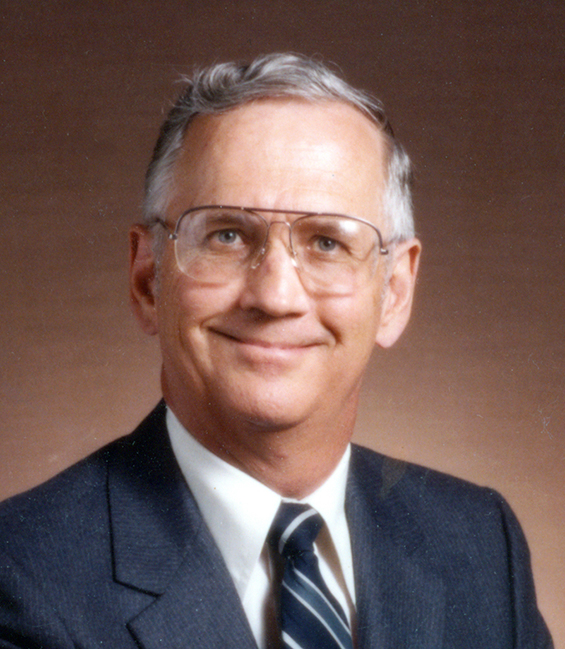
(From the Dallas Morning News, Sept. 17, 2017)
Jeff D. (Dave) Chalk III, U.S. Navy and Korean War veteran, Southern Methodist University physics professor, and beloved husband, father, grandfather, great-grandfather, friend, and neighbor, died in the early hours of September 10, 2017 in Dallas after a short illness. He was 87.
Born in Dallas to a high school chemistry teacher and his wife, “Davy” Chalk was the third of three children. An early independent streak showed itself at age four, when he took off an itchy, woolen swimsuit at the neighborhood swimming pool and, while his older brother was distracted by a girlfriend, walked the two blocks home, bare naked. As the Great Depression and World War II ran their courses in the background, he rose from a Cub Scout to the rank of Eagle, worked long summer hours on family farms, and mastered swing and jitterbug steps taught him by his sister. His years at Dallas’s Sunset High School were busy: He distinguished himself in academics, including the receipt of a prize for physics; he was active in ROTC and was elected regimental commander; and he lettered twice in basketball, earning the nickname “The Machine” for rarely missing a free throw.
Entering what then was The Rice Institute in Houston in the autumn of 1947, Davy pursued a degree in electrical engineering and eventually was elected battalion commander of the Rice naval ROTC. He also became a virtuoso jitterbugger, traveling on weekends to learn the very latest moves and visiting clubs in Latino neighborhoods to pick up rhumba, samba, and tango steps. When back in Dallas, he spent many an evening at LouAnn’s on Greenville Avenue, where, as friends would later recount, the crowd would clear the dance floor to watch as he and a partner stole the show.
In mid-1952, just as he had almost completed two simultaneous bachelor’s degrees at Rice, he was summoned to join the U.S. Navy at war in Korea. Upon his arrival, Navy superiors ignored his customary name and settled instead for his given name “Jeff,” launching what would be a lifetime of confusion for Dave/Jeff’s different circles of friends, acquaintances, and colleagues. Entering service as a commissioned officer, “Jeff” was thrust promptly into the post of ship’s engineer aboard a destroyer escort, the U.S.S. Lewis. During the next 18 months, the ship would make three extended trips into combat, shelling enemy artillery emplacements around the city of Wonsan on the northern Korean coast. On the third mission, the ship’s engine room took a deadly hit from an enemy shell, forcing the Lewis back to Japan and then California for repairs. Sent back to Asia but out of combat, he explored friendly ports along the Pacific rim, as on one day, when taking a shortcut in Hong Kong, he found himself closely surrounded by a small crowd of street boys with their hands out, begging. Rebuffed, the boys immediately produced cans of black shoe polish and held up oily fingerfuls within an inch of his pristine, white, naval-officer uniform. One by one, he carefully bought each of them off with pocket change and, unsullied, went on his way.
Discharged from the Navy in May 1955 with the rank of lieutenant junior grade, Dave returned to Rice to complete his earlier work and begin a two-year masters program. Back in Dallas temporarily the following summer, he telephoned a neighbor who once had been his Cub Scout den mother and who first thought he was calling to catch up with her. He had other ideas, however: A mutual friend had told him that the woman’s daughter, Sarah Slay, now a recent graduate of Texas Christian University, had grown up to be “a flaming beauty.” The two would be engaged after four months, wed in seven more, and married for the next sixty years.
Captivated by exciting mid-century developments in sub-atomic theory, Dave began a PhD in physics in the autumn of 1958 at the University of Colorado in Boulder. Settling afterward in Dallas to be close to family, he and Sarah eventually bought a lot on Hanover Street in University Park near his new employer, Southern Methodist University. In 1967, he moved his wife and four young children into a house of his own design that included a signature curving staircase, and it would remain his home until his death fifty years later.
From the beginning of his more than three decades as a member of SMU’s physics faculty, Dave made his courses popular through a combination of showmanship and personal dedication. In a physics class for pre-meds that normally was dreaded by students, the room would fill for his demonstrations of basic principles, as when he would lie on a bed of nails and have a sledgehammer-wielding volunteer shatter a cinder block resting on his chest. One student evaluation simply read, “He drinks liquid nitrogen!” Students in his popular entry-level astronomy class could get extra credit for showing up in a campus park at 4:00 a.m. to look through his telescope and eat free donuts. Despite being stood up sometimes in the early morning darkness, he remained convinced that every one of them could be made to share his enthusiasm for the subject matter if he could only convey it to them well.
Dave thwarted cheaters by refusing to re-use any homework or test questions, creating fresh material each year. When giving grades, he was rigidly fair: “He is tough, but it’s only because he loves us,” wrote one student evaluator. Still, he shared personally in his students’ triumphs and failures, rooting for them to beat expectations and coming home crestfallen if results—for a med-school hopeful or an athlete on scholarship, say—had come up short and put their dreams in jeopardy. His office hours for students were regular and long, and he spent countless more hours each year composing highly personalized graduate-school recommendations for every applicant who requested one. On campus, he readily assumed non-academic roles—on SMU’s athletic committee, as an officer in the faculty senate, as acting chair of the physics department, and chief marshal of campus-wide commencement ceremonies, to name just a few.
He was a natural athlete, playing pick-up basketball with his students for many years and staying on the tennis court well into his 70s. He played a fierce hand of bridge, adored singing around the piano, and relished a great brisket or peach cobbler. An active and faithful member of Highland Park Presbyterian Church for many decades, Dave often composed heartfelt prayers for an adult Sunday class each week in his later years. Similarly, he became a master of the long-form joke, collecting and delivering the winding gags at family gatherings.
As a father, he was more inclined to inspire than direct, delighting fully in each one of his children’s varied gifts and interests and offering endless patience and magnanimity. Proud of his record as a YMCA youth basketball coach—his older son’s team went undefeated over three years, even—he remained a model of civility and sportsmanship, characteristically focusing less on winning than on hard work and doing one’s very best. As a Scout leader in the mid-1970s, he willingly camped out many nights each year and carried a 40-pound backpack up and down mountains at the Philmont Scout Ranch in New Mexico. He was especially committed—through everything from disciplinary chats to campfire songs—to resisting what he saw as a rising tide of coarseness in youth culture. Later, to all of his grandchildren and great-granddaughter, he was unfailing in his love and encouragement, and he relished their many accomplishments with emphatic praise and pride.
To his last day, Dave remained a gracious and soft-spoken gentleman, looking only for the best in others. He was able to lose himself in a novel, song, movie, or musical and derive from it a remarkable measure of joy. He was always especially quick to declare his love and admiration for Sarah as a devoted wife and mother and was an avid and enthusiastic supporter of her many musical, creative, and charitable activities. Decades afterward, he recalled on what sofa they did their “best sparking” in the fall of 1956, and even when bedridden at age 87, he would perk right up and compliment her when she entered the room, and those old sparks would start to fly.
The last person to speak with him was a nurse at a nearby rehabilitation center who had stopped in to check on him in bed in the wee hours of September 10, 2017. Knowing Dave had been a physics professor, the nurse asked him if he remembered the speed of light. He smiled and laughed, “I think it is about 299 million, 700,000-something meters per second—in a vacuum.”
And then he said goodnight.
Jeff D. Chalk III is preceded in death by his parents J.D. Chalk, Jr. and Kathryn Nevill Chalk, brother Neville Chalk and sister-in-law Jane Chalk, sister Kitty Chalk Holmquist and brother-in-law Fred Holmquist, and son-in-law Kelley Oliphint.
Survivors include his wife Sarah Slay Chalk and brother-in-law Frank Slay; son Jeff Chalk and daughter-in law Denise Shebell Chalk; daughter Rebecca Chalk Krueger and son-in-law William Krueger; son Philip Chalk and daughter-in-law Indra Sehdev Chalk; daughter Priscilla Chalk Oliphint; nieces Jane Chalk, Margaret Holmquist, Anne Slay Scholz, Mary Slay Bass, Laura Slay Gibbons; nephews Richard Chalk and John Slay; grandchildren Katherine Krueger, Whitfield Krueger, Christian Krueger, Austin Chalk, Andrew Chalk, Madeleine Chalk, Mary Margaret Chalk, Judge Chalk, and Benjamin Oliphint; and great-granddaughter Sarah Violet Krueger. |
|
|